
LifeP.A.T.H.: The Road Before the Tour
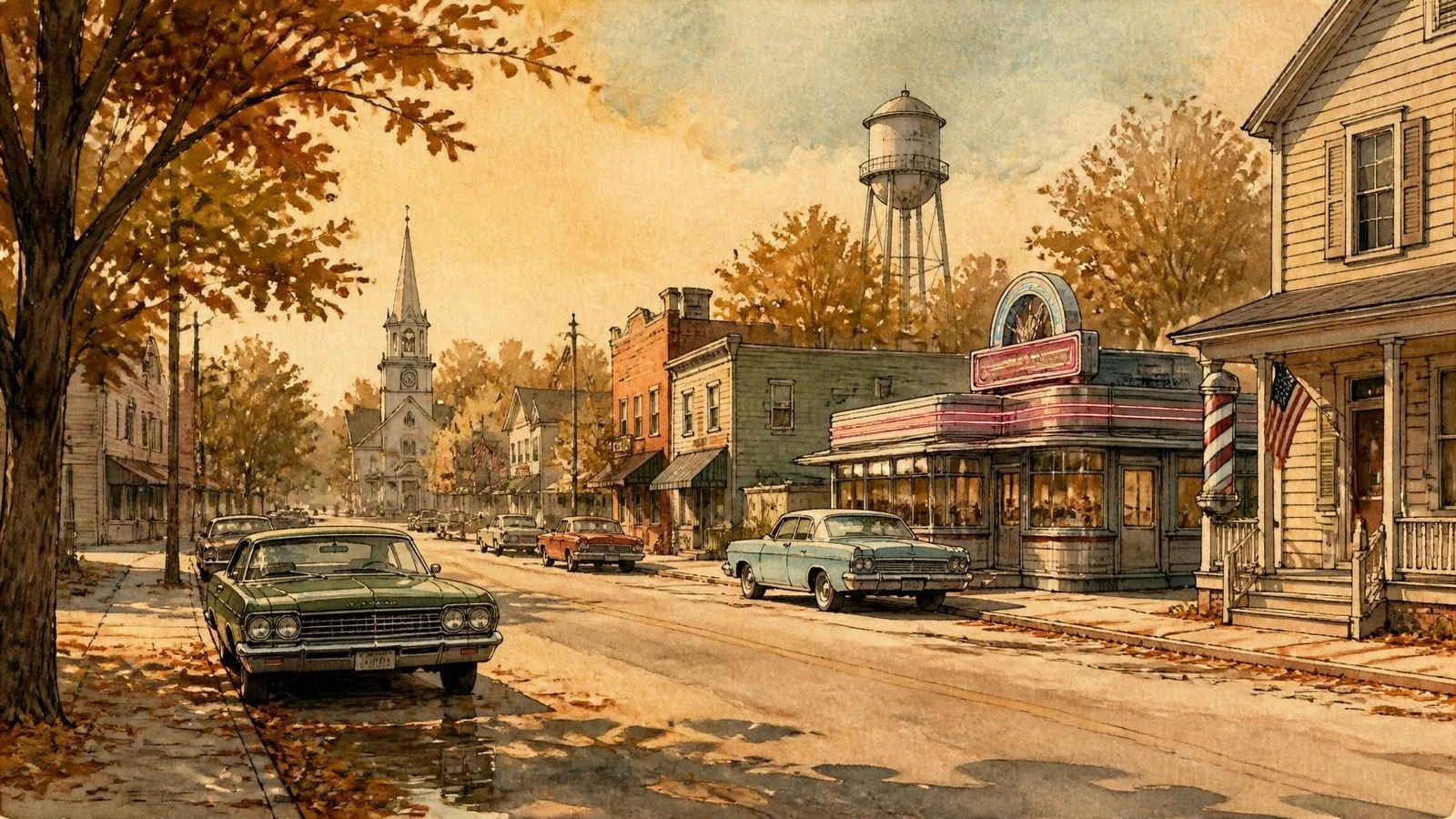
The first day of P.A.T.H.: Vietnam is 1 August 1967. The first day of your character's life is not.
That simple fact sits behind LifeP.A.T.H., one of the project's longest-running ideas. The name and concept have belonged to the P.A.T.H. identity for years. In March, the digital version was refined into a clearer character journey, but the principle remained the same: nobody arrives in a war without a past.
LifeP.A.T.H. is the road into the playable tour. It asks where the character came from, what shaped him, what he learned, who mattered, and what he believed the future would look like. Those answers influence the character sheet, but their real purpose is to give the sheet a life.
Why begin before the game begins?
In many roleplaying games, background is a short paragraph placed beside the statistics. It can be rich and memorable, yet mechanically separate from play. In P.A.T.H.: Vietnam, I wanted the earlier life to leave fingerprints.
Schooling can affect what a character knows and how others use that knowledge. Work can create practical familiarity. Family and community can shape social instincts. A hometown is not only a label under a portrait; it changes what “home” means when the mail arrives.
This approach does not claim that a person is determined by biography. The tour still changes people in unpredictable ways. LifeP.A.T.H. simply refuses to treat the soldier as a blank piece issued at reception.
It also creates a useful tension. The Army assigns a role, provides training, and expects standard behaviour. The individual arrives with habits, expectations, loyalties, and blind spots that do not fit neatly inside that role. Much of character play lives in the space between the person and the job.
A road, not a questionnaire
The best character creation feels like movement. One choice leads naturally to the next. A place suggests a family circumstance. An education suggests an opportunity or its absence. An early job suggests a skill, a confidence, or a frustration. Military training then meets that existing person.
That is why I think of LifeP.A.T.H. as a road rather than a form. A form asks for facts. A road helps the player notice connections.
Imagine two Mechanics. Both begin with the same military role and similar technical strengths. One learned by keeping farm equipment alive because replacement parts were scarce. The other worked around a city garage and can identify a problem from its sound. Their sheets may overlap, but the player will read their choices differently. One may be patient with improvised repairs; the other may trust speed and practiced instinct.
The game does not need to generate every sentence of that distinction. It needs to give the player enough structure to imagine it and enough consequence to keep it alive.
Relationships begin here too
War stories often introduce home only when a letter is opened. LifeP.A.T.H. tries to establish those connections earlier.
Who writes? Who does not? Is there someone receiving money each month? Is a gift from the catalogue an obligation, an apology, or a genuine surprise? Does a photograph become evidence that the character is all right, even when the player knows the image does not tell the whole truth?
These questions give later systems a second meaning. Finance is not only a way to allocate money. Mail is not only a morale event. The Photo Album is not only a collection screen. Each can reach backward to the life established before the tour.
This is also where a post-war dream matters. A character may expect to return to school, a trade, a family business, a relationship, or a life that now seems distant. The dream is not a guaranteed ending. It is a direction. As the tour progresses, the player can consider whether that direction still fits.
History without reducing people to categories
A character's background includes historical realities. Race, class, education, region, and opportunity were not neutral in 1967. They affected how people were treated, what choices were available, and what additional weight a soldier might carry inside the same uniform.
The design challenge is to acknowledge this without turning identity into a simple bundle of bonuses or a parade of lessons. P.A.T.H.: Vietnam uses background to shape capability and to open moments another character may not experience. It does not claim that one menu can contain a human life.
The player is invited to notice difference, not to solve it.
This is one reason the game keeps much of its system quiet. If every human moment immediately produced a visible number, the number would take over. The better result is often a changed line in the journal, a different response from a squadmate, or a choice that feels heavier because of what came before.
The character keeps travelling
LifeP.A.T.H. does not end when character creation closes. The path continues through the tour.
Experience turns training into field knowledge. Rank changes how others see the character and what may be expected of him. Stress and morale alter the shape of a day. Friendships become trust, or do not. A medal adds an official story to the record, while the private journal may remember the same event differently. Gear wears out. Photographs accumulate. The calendar shortens.
In that sense, the whole game is still LifeP.A.T.H. The opening simply gives the player a place to begin.
A useful way to start
When you build a character, try choosing one detail in each direction:
- Something behind him: a place, person, skill, or unfinished problem.
- Something beside him: the role or responsibility he takes seriously.
- Something ahead of him: the life he expects after the tour.
These do not need to be dramatic. Quiet details often last longer. A promise to send money home, a wish to buy a camera, a habit of repairing things, or a letter that is difficult to answer can carry through many days.
The war will provide enough drama on its own.
LifeP.A.T.H. exists so that when the first day begins, you are not asking, “What can this character do?” You are also asking, “What has he already carried this far?”