
The Grunt: Learning the Ground War
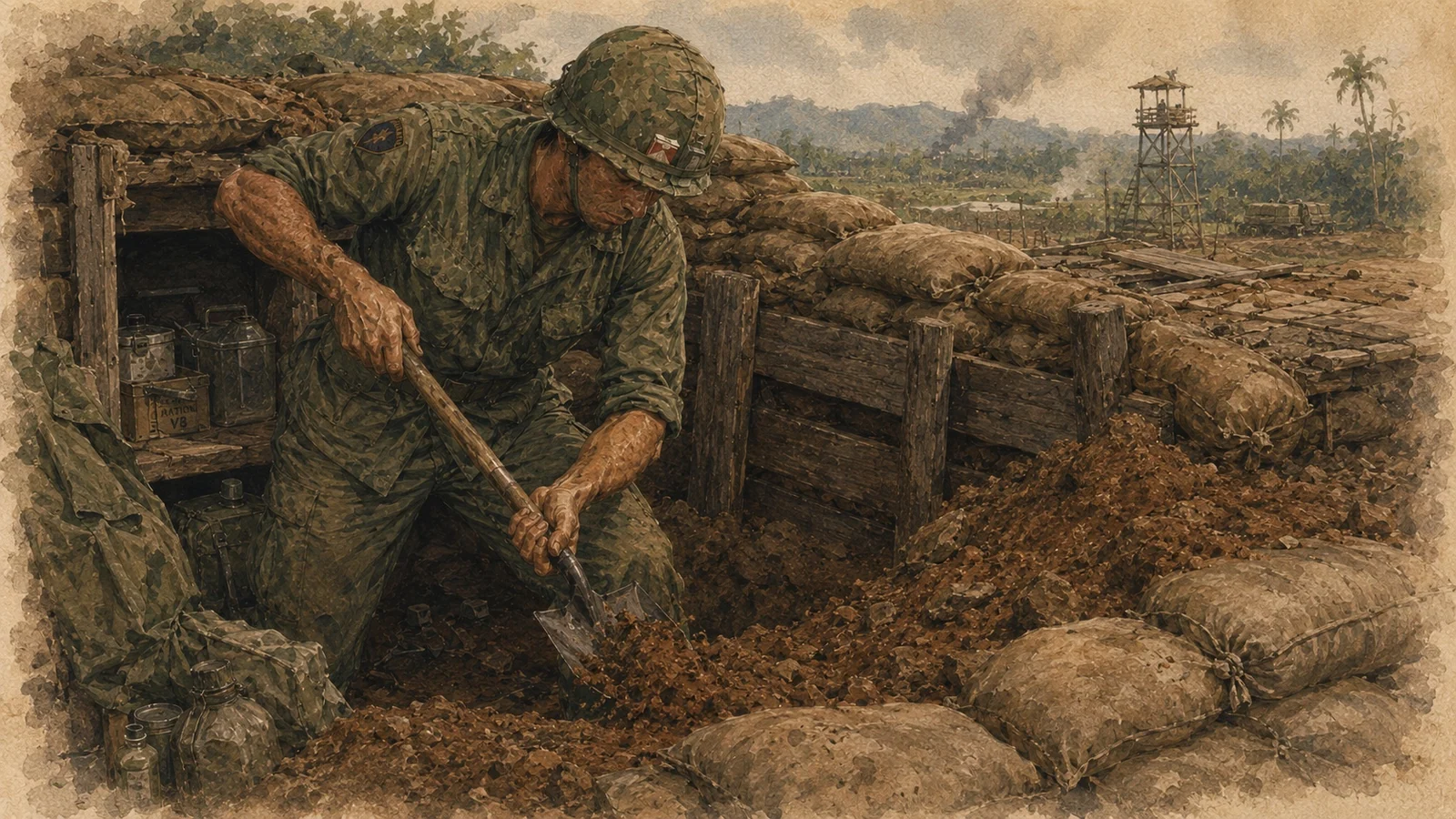
“The Grunt” is the plainest title in the P.A.T.H.: Vietnam launch roster. That plainness is part of its meaning.
The Grunt is the infantry soldier whose job fills whatever space the day creates: move, watch, carry, dig, secure, wait, react, and keep the people nearby alive. He does not carry a medical identity, a radio identity, or a specialist tool that explains him from across the room. His identity is the ground war itself.
For a first tour, this makes the Grunt an excellent choice. It does not make him the “basic” character.
A role built for the whole day
The Grunt begins with strong physical attributes and better training in ranged combat. That foundation is useful in obvious moments, but much of the role is about the connective tissue between them.
On patrol, the Grunt may be reading the ground, maintaining spacing, helping with security, or carrying more than he would choose. Back at camp, he still pulls details, stands watch, maintains equipment, writes home, and lives with the squad. When another specialist is working, the Grunt often helps create the time and space for that work to happen.
This makes the archetype broad without making it vague. Your specialty gives the role a sharper edge:
- Fire and Movement emphasizes working as part of a moving team.
- Sniping leans toward patience, range, observation, and the burden of a
deliberate shot.
- Point Man places the character at the front, where noticing something early
can matter to everyone behind him.
Choose the specialty for the kind of responsibility you want, not merely the bonus you expect to use most often.
Packing for the Grunt
The Grunt's standard equipment is familiar infantry kit: rifle, magazines, grenades, protective gear, helmet, and pack. The useful question is not whether to take equipment. It is how to divide it between the fighting load, the rucksack, and the footlocker.
Your fighting load should contain what you cannot afford to search for when a situation changes quickly. The rucksack carries the longer day: supplies, comfort, and the items that make sustained movement possible. The footlocker holds what matters at camp but does not need to ride on your back.
Strength gives the Grunt a good starting capacity, but capacity is not an invitation to carry everything. Weight affects Mobility and Stamina when the load passes the character's limit. The ruck adds capacity, yet a full ruck is still a physical reality. When contact begins, dropping it can return the character to a lighter fighting load.
This produces a satisfying rhythm. Before movement, you prepare. During movement, you live with the preparation. Under pressure, you decide what stays on your body and what hits the ground.
The best Grunt loadout is therefore not one universal list. A watch at camp, a road-security run, and a longer foot patrol create different needs. Check the day, check the weather, check the state of your equipment, and carry with a reason.
The Point Man problem
Point Man deserves special attention because it captures the archetype's quietest form of leadership.
Being first does not mean racing ahead. It means moving at the speed of attention. The point position is where terrain, tracks, wire, disturbed vegetation, sound, and instinct become urgent information. The player may have no dramatic action to take if everything goes well. That absence can be the success.
P.A.T.H.: Vietnam values this kind of work. Prevention is difficult to celebrate because the avoided event has no spectacle. The game tries to remember that getting everyone through is an outcome, even if no medal citation describes the moment.
This applies beyond Point Man. A cleaned weapon that does not jam, dry feet that do not become a medical problem, and a reasonable load that does not exhaust the soldier are all invisible victories. The Grunt is where these small systems meet most naturally.
How the role grows
Experience allows the character to raise skills during appropriate time at camp. For a Grunt, the temptation is to spend everything on the most obvious combat ability. That can be sensible, but the tour rewards a wider view.
Mobility and Stamina help you live with equipment and terrain. Recon supports attention. Survival makes the environment less abstract. Close Combat may be a weakness you never want to need, but the war does not promise to respect your preferences.
Consider the person you created through LifeP.A.T.H. If he began as a strong shot with poor field sense, the first stretch of the tour may teach him to notice. If he came in physically capable but socially distant, the important growth may not appear on a combat line at all. Advancement is most satisfying when it tells the story of what the character actually had to learn.
The Grunt outside contact
A good Grunt dispatch could easily become a weapons dispatch. That would miss most of the tour.
The Grunt lives in the Field Desk as much as any other role. Photographs can turn ordinary squad life into a record. Finance can show whether the character spends on immediate comfort, saves for later, supports someone at home, or keeps a little available for a squadmate. The journal can reveal a person who sounds very different in private than he does around the hooch.
Mail is particularly useful for resisting the idea of a generic infantryman. Who does he write to? What does he leave out? Does he become more honest as the tour continues, or less? A Grunt may share a job with thousands of others without sharing the same inner life.
Why start here?
Choose the Grunt when you want the tour without a layer of specialist distance. The role brings you close to the ground, the squad, the kit, and the daily work. It asks for judgment more often than cleverness.
The hook beneath the archetype is simple: the job is keeping your people alive. That can mean returning fire. It can mean carrying the right thing. It can mean staying awake, noticing first, sharing a burden, or deciding that the bravest action is not the loudest one.
The Grunt is not a blank default. He is the person who discovers that ordinary work becomes extraordinary when it must be done every day, under weight, with an end date circled on the calendar and other lives moving beside his own.