The Medic Keeps People in the Story
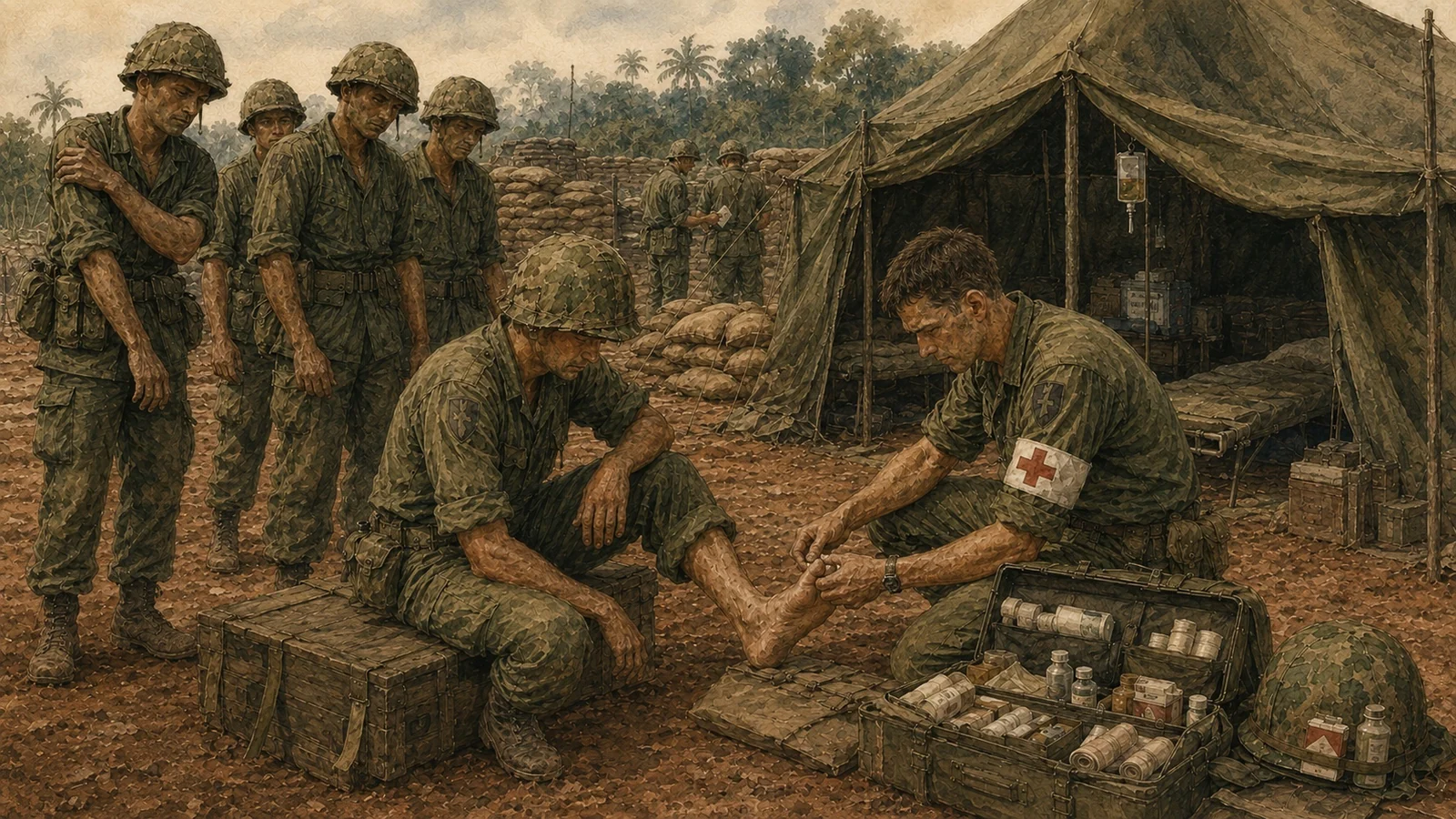
The Medic has one of the clearest purposes in P.A.T.H.: Vietnam: preserve life.
Clarity does not make the role easy.
When the squad needs the Medic, someone is frightened, hurt, or running out of time. The ideal equipment may be elsewhere. The situation may still be dangerous. There may be more than one person who needs help. The role turns knowledge and empathy into action under pressure, then asks the character to live with what happened after the pressure passes.
For players who want the human stakes of the tour close at hand, the Medic is one of the strongest places to begin.
A different kind of capability
The Medic starts with better Intelligence and Empathy, supported by Medical Aid and a useful mix of social, observational, and physical skills. He can carry a rifle, but the rifle does not explain his value to the squad.
His equipment does. The medical kit, bandages, fluids, and limited supplies represent possibilities: stabilize, treat, reduce harm, keep someone moving, or buy enough time for further care. Those possibilities depend on the item being present when needed.
This makes the Kit view particularly important. Medical equipment competes with water, protective gear, personal items, and everything else that must be carried. Leaving too much behind can remove an option. Carrying everything can slow the person expected to reach a casualty.
There is no perfect medical pack for every day. A short duty at camp and a longer operation do not create the same risk. Good preparation begins by understanding the movement ahead rather than copying one permanent list.
Trauma Care or Field Medicine
The Medic's specialty choice points toward two related identities.
Trauma Care belongs to the urgent moment. It is the work of seconds, priorities, and serious injury. The character is at his best when the world has suddenly narrowed to what must be done now.
Field Medicine belongs to the sustained health of people living in difficult conditions. It includes the less dramatic problems that become dangerous when ignored: infection, illness, exhaustion, damaged feet, poor hygiene, and the slow cost of the environment.
Both matter in P.A.T.H.: Vietnam because the game does not treat injury as the only threat to the body. A soldier who skips sleep, neglects his feet, fails to eat, or lets basic maintenance slide can become less capable before a shot is fired. The Medic understands that the spectacular emergency often has a long quiet preface.
Choose the specialty according to which kind of care you want to notice. You will still encounter both.
The role before the emergency
A common mistake is to imagine the Medic waiting for someone to be wounded. That would make most of the tour feel empty.
In ordinary time, the Medic can become a close observer of the squad. He sees who is not sleeping, who is hiding a problem, who is pushing through when rest would be wiser, and who has stopped taking care of basic needs. Empathy is not only a dialogue advantage; it can shape attention.
The daily action loop gives this role room to breathe. Rest, conversation, letters, meals, washing, and upkeep are not distractions from medical play. They are preventive medicine expressed as life.
The Medic may also build trust differently. People often tell the person who patches them up things they do not tell a leader. The player can decide what kind of presence this character becomes: reassuring, blunt, distant, patient, or quietly exhausted.
The cost of being needed
The Medic carries an emotional load that does not appear on the encumbrance display.
Being the person everyone calls can create purpose, but it can also create pressure. Success may mean another soldier remains in the story. Failure may not mean the player chose badly; sometimes the situation is beyond what a field kit and one pair of hands can solve.
P.A.T.H.: Vietnam must handle that distinction carefully. A historical game should not promise that skill erases chance, severity, or circumstance. It should give preparation and judgment real value without turning every loss into a puzzle the player supposedly failed.
The journal is important here. The official record may list an incident, injury, or award. A private entry can hold confusion, anger, relief, guilt, or the simple fact that the character does not know what to say. The game records events; the player gives them meaning.
Growing as a Medic
Experience can deepen Medical Aid, but the role benefits from a broad view of advancement. Stamina helps the character reach and continue. Recon helps him read the situation. Persuasion may matter when someone must listen. Ranged Combat can remain a last resort without being irrelevant.
The best training choice is often the one that answers the tour so far. If the character repeatedly arrives exhausted, physical development may be as important as another medical step. If he understands wounds better than people, a social weakness may become the next lesson.
This is where the life-history approach improves progression. You are not building a perfect Medic from a guide. You are watching this Medic learn from what actually happened.
Who should choose the role?
Choose the Medic if you want consequence to be personal. The role is well suited to players who notice relationships, preparation, and the quieter forms of harm. It is also a good fit if you prefer decisions with no theatrical answer.
Do not choose it because you expect to “heal” every outcome. Choose it because you are willing to stand beside the outcome and do what is possible.
The Medic's victories may be easy to miss. A fever never worsens. A wounded man reaches further care. A squadmate finally rests. A frightening moment becomes a story someone survives to tell.
That is the role's real power. The Medic does not simply restore a number. He keeps people in the story for another day.