
The PX Truck and the Small Comfort
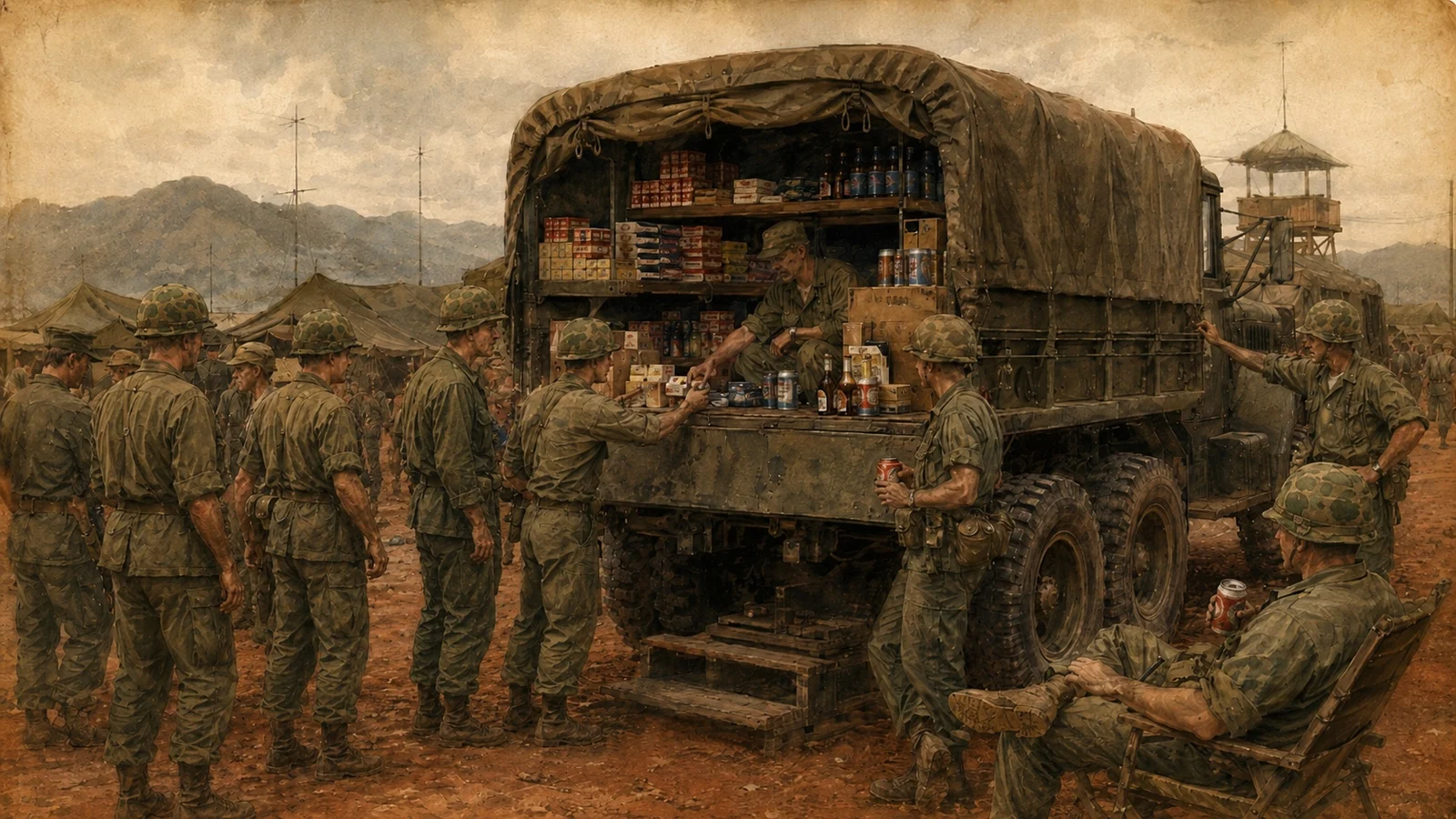
The PX truck does not arrive with a heroic soundtrack. It brings ordinary things.
Drinks, food, toiletries, batteries, reading material, cards, clothing, a watch, a camera, a radio, and the small objects that help a person feel less completely absorbed by the Army. At a forward base, availability itself is part of the event. The truck carries what reached it, when it reached it.
P.A.T.H.: Vietnam uses the PX to make comfort, money, time, and personality visible in one place.
A store is not a pause from history
The period setting appears in large events, but it also appears on a shelf.
Prices are expressed in Military Payment Certificates. The reading rack changes as dated issues arrive and leave. Electronics and cameras belong to their moment. Toiletries, socks, and watches reveal the practical texture of daily life more effectively than a paragraph explaining 1967.
The aim is not to build a museum catalogue. The object matters because the character can choose it, pay for it, carry it, consume it, use it, or leave it at camp.
A current magazine can bring the outside world closer. A camera can create a new action and a lasting record. Batteries keep another object alive. Dry socks are almost comically ordinary until the environment makes them precious.
History becomes tangible when it can sit in the footlocker.
Buy for today, buy for the tour
PX decisions fall into several useful groups.
Immediate comforts reduce the pressure of the present. A drink, snack, or small treat may improve mood without changing the whole campaign. Consumables run out, which is exactly why they feel like comforts rather than permanent upgrades.
Practical items support upkeep or field life. Clothing, hygiene supplies, foot-care needs, and simple repair goods can prevent small neglect from becoming a larger problem.
Tools for memory and connection—camera, film, recorder, radio—create possibilities rather than instant bonuses. They need supplies, time, and the decision to carry or use them.
Longer-term personal items, such as a watch or durable field comfort, can become part of the character's identity. Their value may be mechanical, emotional, or both.
A balanced first purchase usually includes something practical and something that tells you who the character is.
Availability makes timing matter
The forward resupply truck is not a permanent department store. Stock depends on what arrived. Dated material appears in its own time. This means “I will buy it later” is not always a neutral decision.
That uncertainty should not turn shopping into panic. Most objects are not secret keys to winning the tour. It simply gives the store a life. The player can notice that the world changes between visits.
Timing also interacts with money. Payday creates a new sense of possibility. An upcoming obligation at home may reduce it. A loan to a squadmate may leave less available. An item seen today competes with savings and with the Catalogue, where a gift can be sent to someone else.
The PX asks, “What helps here?” Finance asks, “What matters later?” The player answers with the same pocket.
Comfort is a real system
Stress and morale move quietly beneath the fiction. Small comforts can help, but P.A.T.H.: Vietnam avoids presenting them as a vending machine for perfect mental health.
A magazine, game, radio, or familiar taste can make one evening easier. It does not erase a wound, repair a relationship, or solve the war. That limit is important. Comfort should be meaningful without becoming magical.
The player can still build a pattern. A character who reads, listens, takes photographs, or keeps a small routine develops a way of surviving ordinary time. Another character may spend almost nothing on himself and send money home. Neither is a simple moral answer.
The hidden cost is not always money
Buying an item is only the first decision.
Does it need film or batteries? Does it occupy carried weight? Is it useful only at camp? Will a perishable supply run down? Does the player remember to bring it on the day it matters?
This is where the PX connects to the Kit screen. A camera in the footlocker is safe but cannot take a field photograph. A radio carried outside camp has a cost in weight. New boots can support the body, but the old problem of tending feet does not disappear. A purchased comfort may be more valuable left in the hooch than added to an already heavy ruck.
Ownership creates options. It does not remove context.
Shopping as roleplaying
Try giving the character a spending habit.
Maybe he always buys reading material because the outside world feels necessary. Maybe he is careful with money but cannot resist good equipment. Maybe he buys for the tent line and becomes the person who turns one purchase into a shared evening. Maybe he avoids the PX because everything feels temporary until a camera changes his mind.
This habit can evolve. An early-tour character may spend freely because home feels far away. A short-timer may save every dollar. A difficult month may make comfort feel necessary rather than indulgent.
The game does not need to label the character generous, frugal, impulsive, or sentimental. The purchase history can say it.
The best thing on the truck
There is no single best PX item. That is deliberate.
The most useful purchase is the one that answers a real need. The most memorable purchase is the one that becomes part of the tour's story. Sometimes they are the same object. Often they are not.
A dry pair of socks may save a day. A camera may preserve one. A radio may make the distance from home briefly audible. A gift bought elsewhere may matter more than anything kept.
The truck arrives, the shelf opens, and the player receives a small amount of freedom. Not freedom from the tour. Freedom to decide what kind of ordinary thing is worth carrying through it.