
Medals Arrive After the Moment
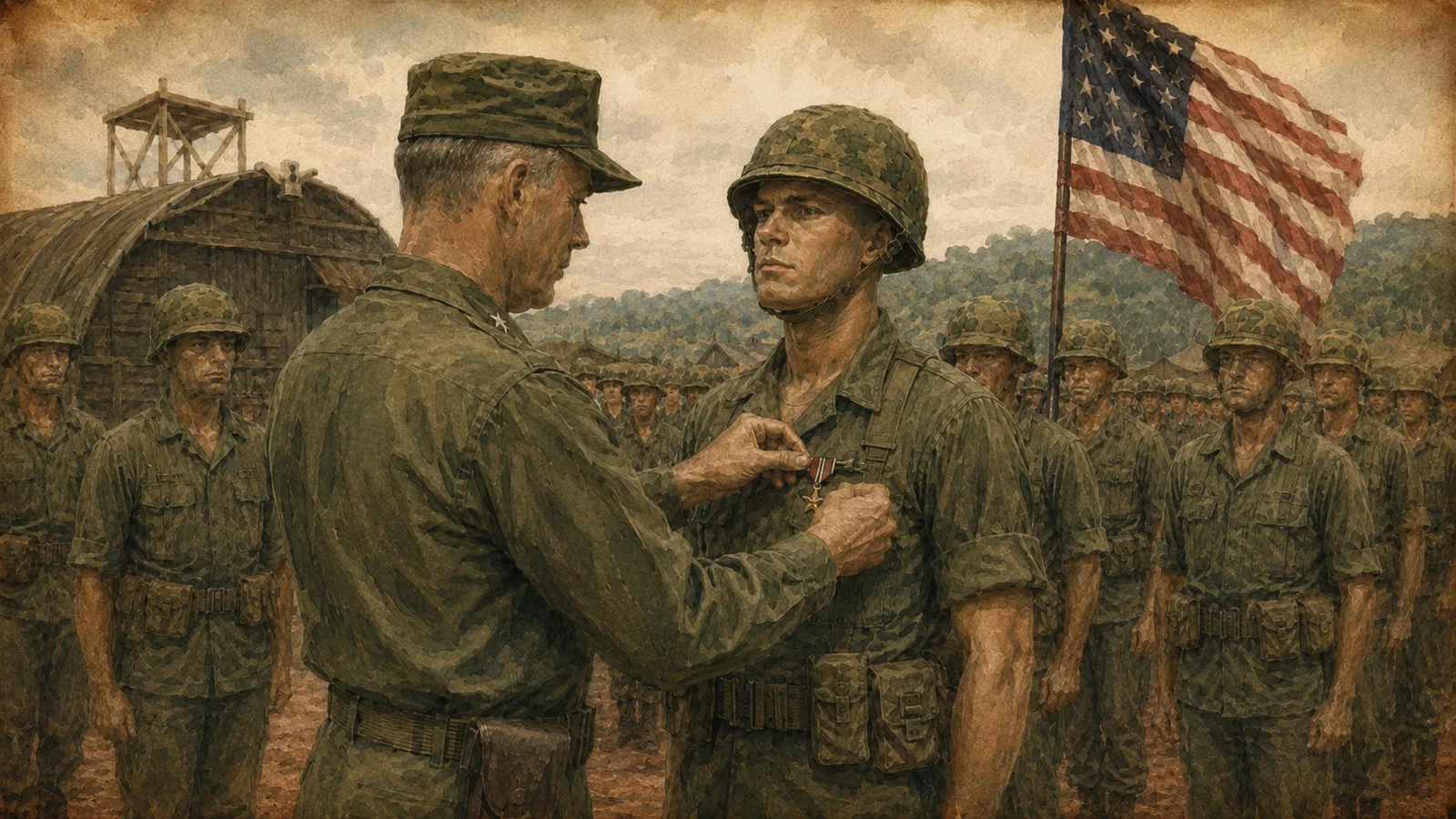
In many games, a medal appears the instant the qualifying action ends. The screen flashes, the reward sound plays, and the player knows precisely how the system judged the moment.
P.A.T.H.: Vietnam makes recognition wait.
A qualifying event can begin paperwork. The decoration may reach the Service Record later and be presented at a formation after days or weeks. The Medal Rack then preserves the official recognition.
This delay is historically grounded, but it also improves the story.
The event does not know its citation yet
When something difficult happens, the character experiences confusion, urgency, fear, training, luck, and consequence. He does not experience the finished paragraph that will later summarize it.
Immediate medal popups reverse that order. They tell the player how to feel before the scene has finished being understood.
Delay allows the event to remain unsettled. The journal may record what the character remembers. The squad may have its own version. The Tour Log preserves the sequence. Only later does the institution assign a name, citation, and piece of metal or ribbon.
The recognition can be deserved and still incomplete.
What the rack represents
The Medal Rack is not a score screen.
It can hold combat recognition, wound recognition, valor decorations, campaign service, and unit citations when the character qualifies. It places them in a formal arrangement that belongs to the Army's way of remembering.
For a player, the rack is most interesting when viewed beside the rest of the Field Desk.
The Service Record shows the official fact. The Journal shows the personal day. The Photo Album may show the people around it. The Calendar shows how much tour remained. The rack alone cannot tell the whole story, and it does not pretend to.
This prevents medals from becoming the only visible evidence of a meaningful action. Many important choices will never produce one.
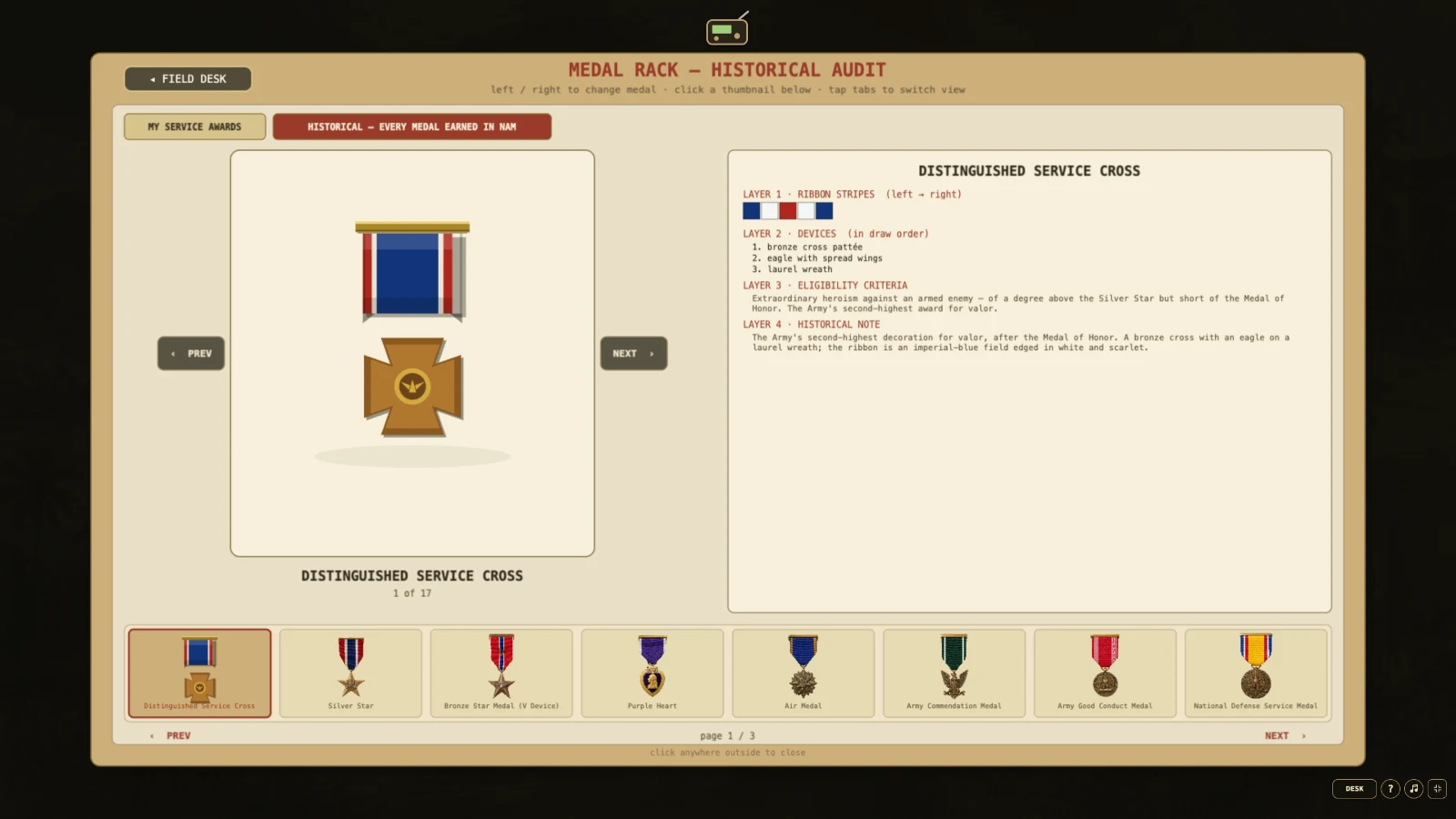
The Combat Infantryman Badge and first contact
The Combat Infantryman Badge has a special place in an infantry tour because it marks participation in ground combat. In game terms, first contact can begin that official story.
For the character, however, “first contact” is not a collectible milestone. It is a change in what the words mean. Training and anticipation become experience.
When recognition arrives later, the player has had time to live with the event. The badge can feel less like a prize and more like confirmation that a line was crossed.
That is the tone P.A.T.H.: Vietnam seeks throughout the system.
Wounds and the problem of reward
The Purple Heart exposes the danger of conventional reward language. A wound can qualify the character for recognition, but being wounded is not an achievement the player should chase.
The medal acknowledges cost. It does not convert harm into success.
This distinction matters in historical games. Systems naturally encourage players to seek what produces badges, points, or completion. P.A.T.H.: Vietnam must avoid making injury attractive because an empty slot exists on a rack.
The design response is to let the record be honest without making it the goal. A complete Medal Rack is not the definition of a successful tour. An empty space is not a failure.
Promotion is recognition of another kind
Promotions also arrive through time, experience, service, and formation. A new rank changes more than the label before the character's name. It can alter how others see him and what responsibilities begin to gather.
Again, the ceremony comes after the accumulation.
The character has already been doing the work. The Army later states that the work now belongs to a higher rank. This can be satisfying, awkward, proud, or heavy depending on what the squad has lived through.
The game gives the player the official event. Roleplaying supplies the private reaction.
How to use the Medal Rack
Do not check it after every tense scene. Let recognition arrive in its own time.
When a ceremony occurs, open the rack later and read it beside the related journal entry. Ask what the citation emphasizes and what it leaves out.
Look at the date. How long did the paperwork take? What happened in the meantime? Did the character still feel like the person described by the recognition?
If the game offers a final service record, the rack becomes part of the whole tour rather than a row of isolated unlocks.
Medals that do not exist
Some of the strongest player actions will not have a decoration attached.
Cleaning the weapon, tending feet, giving a squadmate time, sending money home, carrying a reasonable load, resting before judgment collapses, or treating people fairly may prevent harm without producing a citation.
This is deliberate. P.A.T.H.: Vietnam does not want the player to confuse official recognition with moral value.
The institution records what it has categories for. The game remembers more. The player may remember something else entirely.
Paperwork as part of the world
Delay is sometimes treated as inconvenience that games should remove. Here, delay creates meaning.
The medal must travel through recommendation, review, paperwork, orders, and presentation. That process can feel distant from the muddy event it describes. The distance is historically appropriate and emotionally revealing.
By the time the medal arrives, the character may have changed. Someone involved may be gone. The squad's private language for the event may have replaced the official one. The recognition can bring the moment back without resolving it.
That is why medals arrive after the moment.
The rack shows what was awarded. The rest of the Field Desk shows what it cost.