Rebuilding the Sound of AFVN
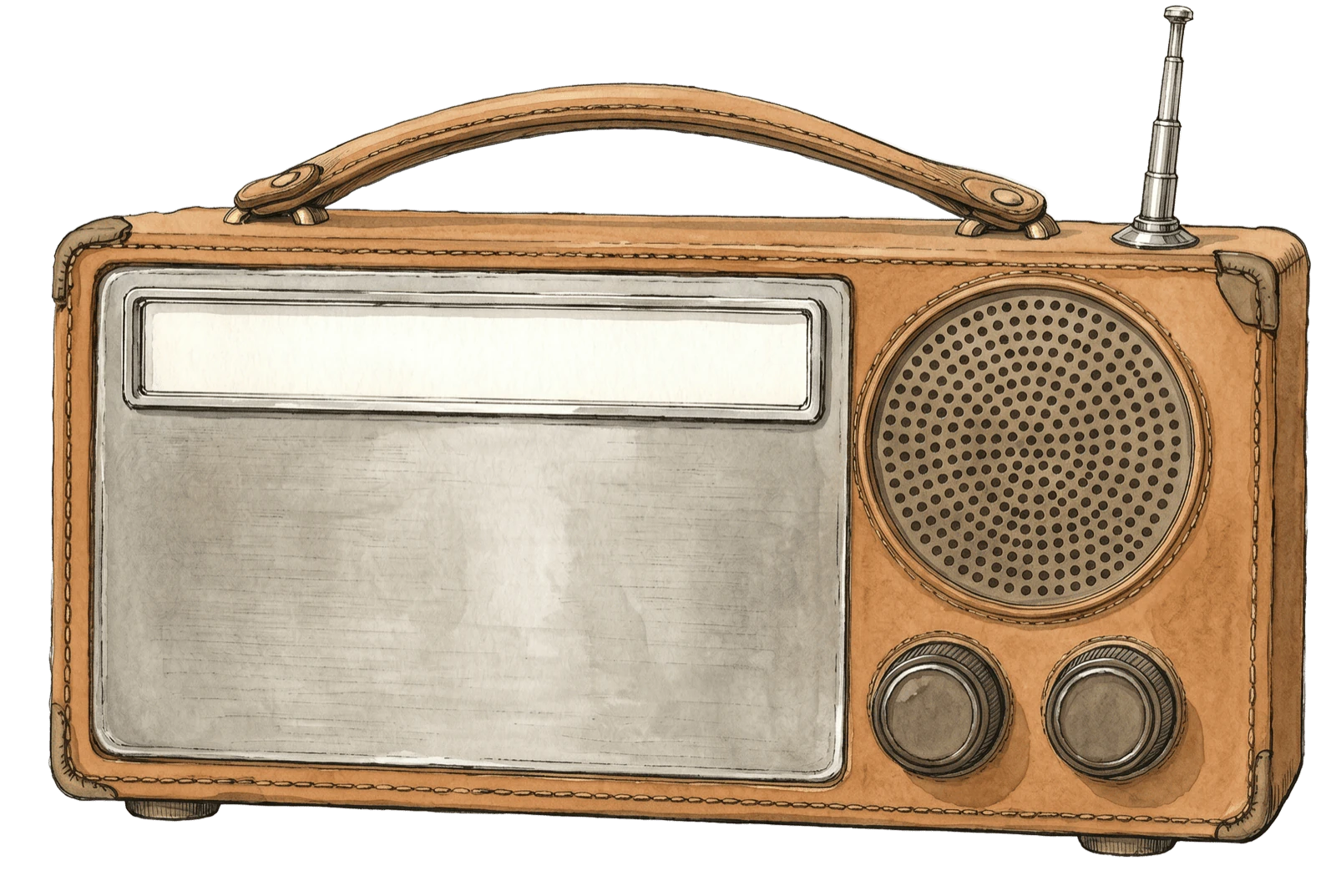
The radio began as a historical atmosphere problem and became a small world of its own.
American Forces Vietnam Network broadcasts survive in archives, and parts of that broadcast history may be publicly accessible. That does not make every song played inside an old programme free to reuse in a commercial game. The announcer, news copy and station identification can sit beside music whose copyright has an entirely different life.
Trying to cut around that problem would always leave the radio fragile. So I chose the more interesting route: recreate the experience without copying the protected playlist.
That decision led to fictional DJs, original songs, invented bands, station breaks, public-service announcements, charts, weather, news and the strange mixture of command information and entertainment that made a military radio station feel like both home and not-home.
The goal was never a folder of period-sounding songs
A soundtrack can provide mood, but a radio station provides company.
The player hears a host introduce a record, an announcement interrupt it, a chart position give it context, and a station voice pull the hour back toward the war. A song means more when it appears to have listeners, a release history and a place in the schedule. It can be the tune someone requests, complains about or hears too many times.
That is why the current radio is arranged as programmes rather than a shuffle button. The Tour of Duty opening mix begins the journey. KLIK at Lai Khe becomes available when the soldier reaches Bravo Camp. Command Information, Town and Country, Dawn Buster, a Late-Night Album Special and the Listener Top 20 arrive on later campaign dates.
Several long programmes are divided into cue-aligned audio files for delivery, but the player hears one continuous timeline. Close the radio and the programme can keep playing. Return later and the station still feels present rather than restarted for the convenience of a menu.
Fictional records make room for real affection
The invented music is not a joke about old records. It has to be good enough that someone might want to hear it again.
The current radio world includes songs such as “Ruby,” “Breakwater Run” and “The Visitor,” credited inside the project to The Switchboard Saints, The Breakwater Runners and The Unmeasured Hours. Around those are other original tracks exploring soul, rock, country, pop, instrumentals and the odd corners of a late-night request line.
The names matter. So do the imagined personalities of the bands. A fictional group should not feel like a legal placeholder called “Generic 1967 Band.” It needs its own emotional weather. A record can sound restless, homesick, reckless, funny or too polished for the place where it is being heard.
The station then gets to behave as though these records have a life beyond one scene. A DJ can refer to them. A chart can rank them. An album special can linger on one. The player begins to recognize a musical culture that exists only inside P.A.T.H.: Vietnam.
The album cover is part of the sound
Once the bands began to feel real, the visual artifacts followed naturally.
I started making cover art for the tracks, then thinking about the full album: the front, the insert, the sequence, the credits and the little design choices that tell a listener what kind of record is in the sleeve before the needle drops. The soundtrack files themselves can carry artwork, but the wider working package can also be treated like a physical release.
These objects do not all need to become collectible game items. Their first job is to make the creative world coherent. If I know what a fictional band's album looks like, how its title is set and what image it chose to represent itself, the DJ copy becomes easier to write and the music has a clearer identity.
It also gives future developer notes and videos something more interesting to show than a waveform. A cover, chart card or liner insert communicates that the soundtrack was built as culture, not poured into an empty audio slot.
History remains the frame, not the borrowed content
The broadcasts still need historical discipline. Station structure, military context, dates and the relationship between information and entertainment can be researched. The fictional presentation should feel plausible without pretending an invented DJ or song is an archival recording.
The game labels the programmes as PATH Remixes. That distinction matters. The radio is a simulation inspired by the sound and function of AFVN, not a claim that the player is hearing an untouched tape from 1967.
Original production also does not remove every release question by magic. Voices, tools, source material, musical similarity, cover imagery and final credits still deserve a rights review before any commercial release. The creative direction reduces a known licensing conflict; it does not replace due diligence.
A larger world through a small speaker
The radio does something no battle scene can do. It reminds the player that the war continues far beyond the current screen.
There is Saigon, command, weather, news, somebody else's request and a song that may have nothing to do with Vietnam until it is heard there. There is also the World—the imagined home on the other side of the broadcast, where music is being released for people whose days are not counted toward DEROS.
The system has grown far beyond the first idea of background music. It is now a station, a schedule, a fictional music scene and a collection of visual artifacts. That expansion created more work, but it solved the more important problem.
The radio no longer sounds borrowed. It sounds as though it belongs to the tour.