
From Home to Dau Tieng: Your First Days
P.A.T.H.: Vietnam does not begin by dropping a finished soldier into a patrol. It begins before the player knows the unit.
The onboarding follows the road from the wider history into one individual life: home and identity, entry into the Army, training, role, departure, arrival in-country, processing, and the journey to Bravo Company at Dau Tieng. It is part character creation, part historical orientation, and part practical lesson in how the game thinks.
The best way to play it is not to rush toward the “real game.” This is the real game. You are establishing the person whose record will carry every later day.
Begin with the person
The early choices describe where the character came from and how he entered service. They affect the sheet, but they also give you material for roleplaying.
Choose details that connect. A hometown, education, family situation, work history, and service entry should not feel like unrelated boxes if you can help it. Ask what one detail suggests about the next.
If the character grew up repairing farm equipment, the Mechanic role may feel like continuity. It may also feel like an Army assignment he resents because it repeats the work he hoped to leave. If he comes from a family that expects money home, the Finance desk will matter differently. If he enlisted by choice, decide what he thought he was choosing. The tour does not need to confirm that expectation.
You do not have to invent a complete biography. A few connected facts are more useful than a page of disconnected drama.
Training creates the military layer
Basic and advanced training add a second identity over the first. The character receives core capability, then a military job with its own skills, specialty, and gear.
This is where the eight launch archetypes enter: Grunt, Grenadier, Machine Gunner, Medic, RTO, Engineer, Mechanic, and Forward Observer. Each is a rules-legal starting character rather than a cosmetic label. The role changes what the player is trained to do and what the squad will later expect.
Look at the whole role, not only its best skill. The Machine Gunner is strong and capable with heavy weapons, but weight and visibility belong to the choice. The Medic has strong medical capability, but limited supplies and emotional responsibility belong to it too. The RTO carries connection and an eight-pound radio at the same time.
The specialty then gives the role your emphasis. Choose the situation you want to be responsible for. Point Man, Trauma Care, Signals, Tunnels, Vehicles, and Fire Support Coordination are not only bonuses. They are invitations.
Arrival is a process
The tour clock begins when the soldier reaches Vietnam, but joining the unit is not instantaneous. The arrival sequence moves through replacement processing, issue and exchange, orientation, and the trip toward Dau Tieng. That distance is useful. It gives the player time to look at the new character before the daily loop settles in.
The rear-area exchange is also your first chance to understand money and objects. A new arrival may see more goods than will later appear on a forward resupply truck. Buying everything attractive is possible only in imagination; money, weight, and actual need quickly narrow the list.
Think about one practical purchase and one personal purchase. The practical one says how this soldier prepares. The personal one says what kind of comfort, record, or connection he values. A useful pair of socks and a camera tell a different story than a radio and a watch.
Do not worry about creating a flawless loadout immediately. The game will teach you what the character actually uses. Leave room to learn.
Take the guided walk
Before the first ordinary day, the game offers a short guided tour of the real interfaces: Field Desk, Service Record, Kit, Journal, Calendar, and Radio.
It is worth taking even if you usually skip tutorials. This walk does not demonstrate fake sample screens. It opens the same tools you will use through the tour. Two minutes spent here can prevent twenty small confusions later.
Notice three locations in particular:
- The Field Upkeep area on the Service Record.
- The carried-versus-at-camp controls in Kit & Inventory.
- The days-to-DEROS count on the Calendar.
These form a compact daily planning loop. Check the body, check the load, check the time.
If you do skip the walk, it can be replayed later from the Field Desk. The game also supports touch, mouse, and keyboard, so use the input method that suits the device rather than feeling obligated to memorize shortcuts.
Your first days are not a test you can fail
New players often worry about spending a day inefficiently. P.A.T.H.: Vietnam is not asking for a perfect opening sequence.
The first days teach rhythm. One major action carries the substantial work of the day. Minor actions let the character write, talk, maintain, listen, or rest around it. Upkeep begins to matter. The journal starts accumulating a record. Squadmates stop being names and begin becoming people.
Use the first stretch to experiment. Open the desk. Move an item into the footlocker and watch the load change. Write an entry. Check the radio. Read the calendar. Choose a small action because it suits the character rather than because it appears optimal.
The game saves automatically, locally and to the account when cloud saving is available and the player is signed in. You should not need to carry anxiety about a manual save through the onboarding.
Meeting the unit
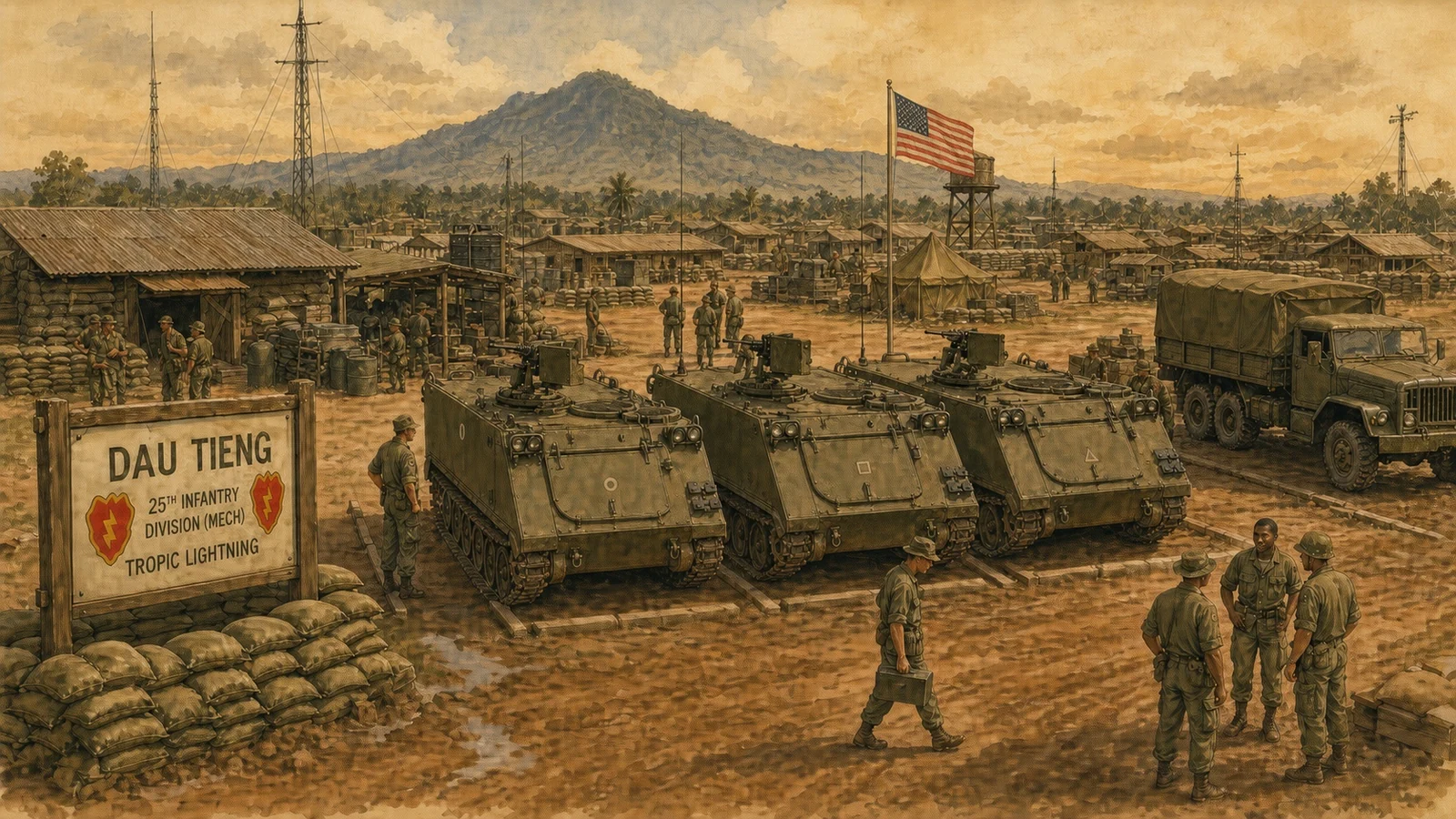
Reaching Bravo Company is the emotional end of arrival and the beginning of the tour's ordinary life. The squad is no longer a future concept. The base at Dau Tieng becomes the place the player leaves and returns to.
This is a good moment to revisit the sentence you used to create the character. Does it still fit after training and arrival? What does he notice first? Which person seems easiest to talk to? Which part of the kit already feels unnecessary? What does the date mean now that the year has a physical place?
Onboarding succeeds when the player does not merely know which button opens the Kit. It succeeds when the player understands why he might open it before tomorrow.
Take your time. The journey from home to Dau Tieng is not a hallway before the game. It is the first part of the path.